By Sam Cohen
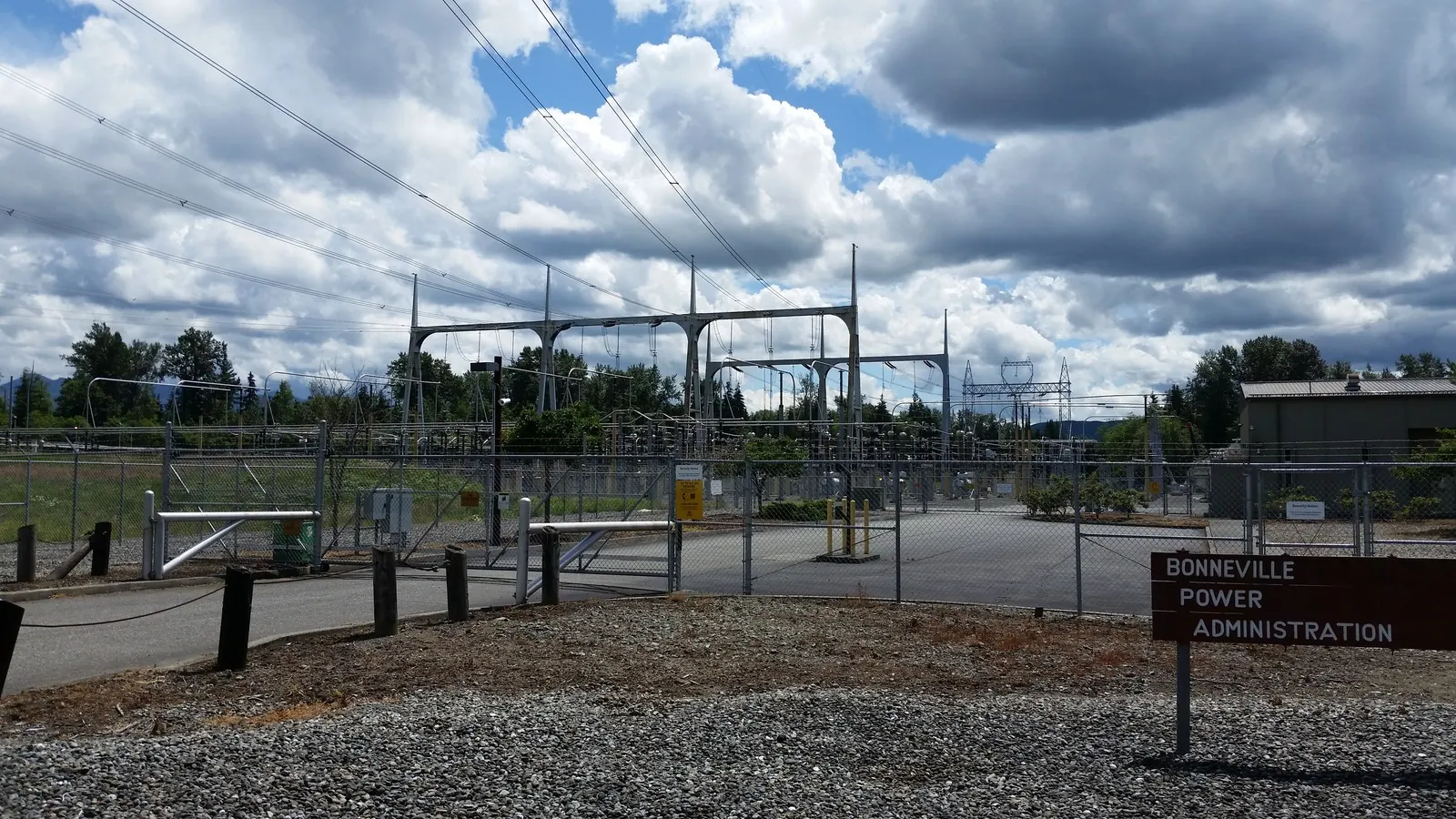
What is powered land?
Powered land is a development site with a credible path to large-load electricity already solved. The land is controlled, and the power case is supported by more than proximity to a transmission line. It is not a building and it is not a promise of cheap electricity. It is a parcel where utility service, an interconnection position, substation capacity, behind-the-meter generation, or a combination of those elements is real enough for a buyer to underwrite. The exact evidence varies by market and project stage. Current Texas data centers show why that distinction matters: a campus can be reported at a large number while the power that is deliverable today remains a separate question.
What “powered land” actually means
The phrase joins two things that are often marketed separately: control of a usable site and a credible route to serving a large electrical load. Both parts matter. A utility letter without land control is not powered land. A deed under a major transmission corridor, without a studied way to take service, is not powered land either.
“Credible” is the working word. Evidence can include a utility commitment, a documented queue position, identified headroom at an existing substation, an executed service agreement, or a defined behind-the-meter generation plan. Often it includes several of these. The evidence should name the parcel or service point, describe the requested load, identify conditions, and survive review by utility, engineering, legal, and commercial teams.
Powered land is a spectrum, not a switch that flips from no to yes. At one end is raw acreage. Next comes land near transmission. Then land with preliminary utility discussions or engineering studies. Farther along is land with an accepted request, contracts, easements, and a funded substation plan. At the strongest end, major electrical equipment and a substation are in the ground, with service milestones documented. Each step removes a different risk. None removes every risk.
AI and hyperscale computing made the term common because land is usually easier to find than large blocks of timely power. A data center can require a sustained load with a steep ramp. The grid was not built around every speculative parcel receiving that service on demand. Interconnection, network upgrades, transformers, breakers, permits, and generation adequacy can become the schedule. The valuable feature is therefore not dirt beside wires. It is uncertainty already removed from the electricity path.
What powered land is not
Powered land is not a powered shell. A powered shell is a building with an electrical backbone but without the tenant’s complete technical fit-out. It may have utility service, switchgear, generators, cooling infrastructure, and interior space ready for racks or other equipment. Powered land is still a development site. Civil work, buildings, and much of the electrical system may remain to be designed and built. Some market language blurs the two, but the capital, construction, and schedule risks are different.
It is also not “the utility said there might be power.” Early utility conversations are useful screening evidence. They are not a commitment. The answer can change when the utility models the actual load, operating profile, service voltage, contingency requirements, and requested date. A credible claim records what has been requested, what has been studied, what upgrades are required, who pays, and what conditions remain.
A generator concept alone does not make a parcel powered. On-site gas engines, turbines, solar, batteries, or a mixed system can form part of the answer. But equipment without fuel arrangements, emissions work, land control, electrical design, and a grid interconnection story is another development concept. Even an islanded design needs a defensible operating and redundancy plan.
Finally, powered land is not an operating data center. The term describes a site input, not a finished facility. It says nothing by itself about server halls, cooling, fiber routes, tenant contracts, commissioning, or current operations. A parcel may have an advanced power position and no building. An operating campus has crossed many later gates.
Why data centers buy powered land
Data center developers buy schedule and risk reduction. Their customer may have a computing deployment date that does not move with a utility study. Starting with a site that has already entered the right process can protect more of that schedule. It also gives the investment committee something firmer than a line on a map.
The electricity plan often has stages. Bridge power is an interim source or service arrangement that supports early construction, commissioning, or an initial load block. A dedicated substation may support the larger permanent load later. On-site generation may cover a portion of the ramp while grid work continues. A hybrid may combine grid service, generation, and storage. The sequence matters as much as the final total. A campus cannot operate its last phase first.
Load size changes the problem. A 50 MW request may fit a very different service path from 200 MW. A campus described at 1 GW requires more than multiplying a small project design. It can affect transmission planning, generation supply, contingency analysis, substation architecture, land use, fuel, and the pace at which buildings energize. The proper question is not only “How many megawatts?” It is “How much, at which point, under what operating profile, and on what date?”
Abilene illustrates the scale. Stargate Abilene, on the Lancium Clean Campus south of the city along Interstate 20, has a reported campus total of 1,200 MW. Its eight buildings are reported at 150 MW each. Buildings 1 and 2 are operating; Buildings 3 through 8 are planned. Immediately south, Crusoe Abilene was announced as a planned 900 MW AI factory campus for Microsoft, with two planned buildings reported at 450 MW each. Those reported figures describe public project scope. Reported MW is not the same as power deliverable at a particular meter on a particular date.
Powered land is not only a gigawatt announcement. AWS Comanche Peak is the plant-next-door pattern: a planned Amazon campus on Vistra property adjacent to the Comanche Peak nuclear plant in Somervell County. The public map lists 11 planned buildings totaling 715 MW reported; all 11 are planned. Meta El Paso is a planned far-northeast El Paso County campus; the public map lists ten planned buildings totaling 988 MW reported. Stream DFW VIII–X in Wilmer, Dallas County, is already operating: the public map lists one operating record at 90 MW reported. Those three sit with the Abilene and Stargate pages as the live Texas teaching set, not as extra press-release MW.
Power may be the gating item, but it is not the only item. Fiber must reach the site through resilient routes. Water and wastewater assumptions must match the cooling design and actual permits. Zoning must allow the use, noise, height, generators, fuel systems, and construction traffic. The community must accept the project’s burdens and benefits. Good powered land moves the hardest electrical risk forward without pretending the rest of development disappears.
How power actually gets to a site in the United States
Transmission and distribution are different starting points
Voltage is a first clue, not a verdict. A 345 kV line is a bulk transmission asset. A 138 kV or 69 kV line may be transmission or subtransmission, depending on the system. A 12 kV feeder is distribution. Higher voltage can move more power, but a parcel cannot simply tap any line it touches. The system owner must approve a connection, and the network must withstand the new load under required conditions.
The practical hierarchy starts with the requested load and service date. Engineers identify the serving utility and the electrically relevant facilities. They look for an existing substation, its transformer configuration, available bays, protection scheme, and plausible headroom. If the load cannot be served there, they evaluate a new substation and the transmission work needed to feed it. A distribution tap may suit construction power or a smaller first phase. It is rarely proof of the ultimate campus plan.
Distance can mislead. A transmission line across the fence may be constrained, committed elsewhere, at the wrong voltage, or owned by an entity that will not provide the proposed service arrangement. A substation several miles away may have a clearer expansion path. Electrical topology matters more than straight-line distance.
Existing substation or new substation
An existing substation can reduce scope if it has real capacity, a compatible service voltage, room for equipment, and an approved expansion path. “Near a substation” is not enough. The diligence package should establish which equipment would serve the load and whether other commitments consume the apparent margin.
A new substation creates a chain of dependencies. Someone must secure its site and access. Engineers must set the bus, transformer, breaker, protection, metering, and control design. The transmission connection may require new line work and easements. Long-lead equipment must be specified and ordered. The utility and customer must agree on ownership, capital responsibility, operating control, and milestone dates. The party funding an asset may not be the party that ultimately owns or operates it.
Interconnection studies and queue position
An interconnection or large-load study asks how the proposed facility affects the system. The process and terminology vary by utility, state, and regional transmission organization, or RTO. An RTO coordinates transmission and wholesale-market functions across a region. There is no honest universal rule that every large load takes the same number of years.
A queue position shows that a request entered a process. It does not, by itself, prove capacity, cost, or timing. Teams need the requested megawatts, service point, study stage, deposits or security, identified upgrades, dependencies on other projects, and rules governing transfer or material changes. They should confirm whether the position follows the land, the applicant, a contract, or none of those without consent.
The load profile belongs in the study. A flat, high-capacity-factor data center is different from an interruptible industrial process. A phased campus is different from a single-day step to full load. Flexibility may help the system, but only if curtailment rights, notice, duration, restoration, and economics are explicit.
Grid service, behind-the-meter power, and hybrids
Grid service supplies the site through the utility system under a tariff or negotiated structure allowed in that jurisdiction. It offers access to a broader resource pool, but the site remains exposed to grid constraints, tariff terms, and the cost of required upgrades.
Behind-the-meter generation sits on the customer side of the delivery meter or otherwise serves the load directly under the approved arrangement. It can support speed, resilience, or a staged ramp. It also introduces fuel delivery, air permitting, noise, emissions, maintenance, black-start, and redundancy questions. Solar and batteries can contribute, but their output profile must be reconciled with a continuous computing load.
A hybrid uses both. The site might begin with a limited grid block and on-site supply, then shift as a dedicated substation energizes. Or it may retain generation for reliability and peak management. The one-line diagram, operating modes, protection logic, and commercial contracts must all tell the same story. “Hybrid” is not a substitute for defining which source carries the load during normal operation and during failures.
Deliverable MW is the number that matters
Nameplate capacity describes equipment under stated conditions. A press-release campus number often describes planned aggregate scope. Neither proves what the grid can deliver now. Deliverable MW is the amount the applicable system and service arrangement can actually supply at the relevant point, with required upgrades and operating conditions accounted for.
The distinction should be carried through every memo. Separate current service, contracted future service, studied but uncontracted capacity, and aspirational later phases. Show dates as milestones and conditions, not as one blended campus total. When a public campus is described as reported MW, treat that figure as project intelligence. Do not silently convert it into available capacity.
Powered land in ERCOT, SPP, and MISO
The physical questions repeat across markets, but the rules, entities, and risks do not. A serious screen identifies the serving utility and market before it describes a power path.
ERCOT powered land
ERCOT covers most of Texas and operates an energy-only wholesale market with its own transmission-planning and interconnection framework. A large-load site must survive more than a statewide supply discussion. It needs a specific delivery point, a serving-utility path, and an analysis of local transmission conditions.
Congestion occurs when the network cannot move all desired power across a constraint. Wholesale prices are calculated at nodes, which are specific electrical locations. Two Texas sites can therefore face different nodal price patterns even during the same hour. A parcel with nearby generation can still sit on the wrong side of a constraint. Historical nodal prices are useful evidence, not a guarantee of future cost.
An ERCOT screen should identify the transmission service provider, the likely point of interconnection, relevant substations and lines, and the study path for the requested load. It should ask what network upgrades are assumed, what other projects those upgrades depend on, and how the campus ramp is represented. It should also distinguish a generator interconnection from authorization to serve the load. Building generation and serving a data center are related but separate regulatory and engineering questions.
West Texas makes the lesson plain. Maps can show abundant generation and high-voltage lines while congestion, stability needs, or a long electrical distance still shapes the site. A buyer should review the node, the constraint history, and the forward network plan, then test the commercial exposure under the expected tariff and contract structure. “ERCOT site” is a location label, not a power conclusion.
SPP powered land
The Southwest Power Pool, or SPP, coordinates transmission and wholesale markets across parts of the central United States. A powered-land claim in SPP must connect the parcel to the correct utility, transmission zone, and study process. State commission authority, local utility rules, and SPP regional requirements can all affect the route.
The first screen is physical: service voltage, substation options, transmission topology, and the requested ramp. The second is procedural: which entity accepts the request, which studies apply, and which upgrades or financial commitments sit with the customer. The third is commercial: the rate, transmission charges, loss treatment, curtailment provisions, and any special contract needed for a load of that size.
Generation timing also matters. A load proposal may be evaluated alongside transmission projects and new resources that are not yet in service. If the power case depends on those additions, document the dependency and what happens if it slips. A pass means the base case works or the contingencies are contractually manageable. It does not mean every regional plan will arrive on schedule.
MISO powered land
The Midcontinent Independent System Operator, or MISO, spans a large, varied footprint. Its utilities operate under different state regimes, resource mixes, and local planning conditions. A claim that “MISO has power” is therefore too broad to underwrite.
Start at the service territory. Confirm the retail provider, transmission owner, proposed service point, and applicable large-load process. Ask how the utility models a staged, high-capacity-factor load and which transmission or distribution upgrades it expects. Then identify the approvals, agreements, security, and construction work between the study result and actual service.
Resource adequacy—the ability to meet demand with available supply under required conditions—deserves separate attention from wires. A substation may provide a physical connection while the utility still needs an acceptable supply plan. Conversely, a power purchase concept does not create local delivery capability. The diligence record should keep energy supply, capacity or adequacy obligations, transmission delivery, and retail service distinct.
As in ERCOT and SPP, a queue reference is only one piece of evidence. Review study assumptions, affected-system issues, upgrade allocation, and milestones. If the buyer will change the load size, ramp, technology, or operating mode, determine whether that change triggers restudy. The strongest MISO sites have a locally specific story that remains coherent across utility, state, and regional layers.
How to tell if a parcel is actually powered
A field screen should try to disprove the claim quickly. The 5-minute site screen uses five tests: substation voltage, congestion, zoning, water, and community. A quick pass is not final diligence. It tells the team where evidence is strong, where the site fails, and what needs a study.
1. Substation voltage and service path
Identify the serving substation and voltage. Trace the proposed route from the grid to the parcel. Ask whether the answer is an existing bay, an expansion, or a new customer substation. Obtain the utility document, one-line diagram, and load request that support the claim.
Pass: The utility identifies a service point and study path for the stated load, and the site controls the needed substation area and easements. Fail: The evidence is a transmission line on an aerial image with no serving arrangement. Needs a study: The utility sees a plausible option but has not modeled the full load or ramp.
2. Congestion and electrical location
Find the electrically relevant node or delivery point. Review historical constraints and how the proposed load interacts with local generation and transmission. Ask whether planned upgrades are assumptions or committed work. Test the expected operating profile, not only peak demand.
Pass: The study and commercial model use the same delivery point and account for known constraints. Fail: The economics assume a regional average price while the site is exposed to a constrained node. Needs a study: The physical path is clear, but upgrade scope or congestion exposure under the final ramp is unresolved.
3. Zoning and land-use authority
Confirm the parcel’s jurisdiction, current zoning, allowed use, and approval path. Review setbacks, building height, noise, lighting, backup generation, fuel storage, transmission structures, and construction traffic. Do not treat low population density as automatic approval.
Pass: The use is allowed or the entitlement path is documented, with electrical and mechanical equipment included. Fail: The campus requires a prohibited use or an unattainable rezoning. Needs a study: Data centers are not named in the code, and counsel or the planning authority must classify the project.
4. Water and wastewater
Match the facility design to the actual source, rights, treatment, discharge, and drought conditions. “Water line nearby” is the water version of “transmission line nearby.” Cooling technology can change demand, but every design still needs a documented operating case.
Pass: The provider and permits support the phased demand and discharge plan. Fail: The claimed source is unavailable to the parcel or barred for the proposed use. Needs a study: Supply may exist, but capacity, quality, seasonal limits, or wastewater treatment has not been confirmed.
5. Community and political durability
Map the decision makers and likely concerns. Large loads can raise questions about rates, water, noise, generators, taxes, jobs, land use, and transmission construction. A legally permissible project can still lose time or operating flexibility if the community case is weak.
Pass: Officials understand the actual project, approval steps are public, and commitments are documented. Fail: A required authority has rejected the use or adopted a barrier the plan cannot meet. Needs a study: Early support exists, but the public has not seen the load, water, generator, or tax details.
The five tests work together. A strong substation story cannot cure a fatal zoning issue. Available water does not fix a constrained delivery point. Record each test as pass, fail, or needs a study, attach the evidence, name its date, and assign the next decision. That is more useful than a single “power-ready” badge.
Powered land example: the Abilene cluster
The Abilene cluster shows powered land in the wild because the electrical story has moved beyond a speculative parcel while the campus itself remains a mix of operating and planned buildings.
Stargate Abilene sits on the Lancium Clean Campus in Taylor County, south of Abilene along Interstate 20. The campus has eight buildings reported at 150 MW each, for a reported total of 1,200 MW. Buildings 1 and 2 are operating. Buildings 3 through 8 are planned. Oracle has described eight buildings on 1,100 acres with about 4 million square feet. Lancium reports that ERCOT approved a 1.2 GW interconnection. The Development Corporation of Abilene said in March 2025 that Lancium had built a 200 MW substation and had a 1 GW substation under construction. Crusoe described the first two halls as 200-plus MW when they went live.
Immediately south, Crusoe Abilene was announced on March 27, 2026 as a 900 MW AI factory campus for Microsoft. Its two planned buildings are reported at 450 MW each. Crusoe said the addition would use a dedicated on-site power plant and would bring its combined Abilene infrastructure to about 2.1 GW. That is Crusoe’s public claim, not a statement that 2.1 GW is currently deliverable.
The cluster fits the powered-land idea because land control, major electrical infrastructure, an interconnection claim, operating facilities, and additional planned phases can be examined together. It also shows why the label needs careful verbs. Some buildings operate. Others are planned. Substation work has been reported at different stages. Campus MW is reported scope, not proof of deliverable power for every phase.
The example does not settle fiber, water, permits, commercial terms, or future milestones. Those require their own records. It does show the difference between acreage near a line and a development platform with physical and procedural evidence. The broader Texas data center directory provides the regional context.
Related planned Texas campuses show the range of reported scope: Stargate Frontier in Shackelford County is reported at 1,820 MW across ten planned buildings; Stargate Milam in Milam County is reported at 1,200 MW across four planned buildings; and QTS Turkey in Hall County is reported at 999.9 MW across eleven planned buildings. The rest of the live Texas teaching set is off that Stargate cluster: AWS Comanche Peak (715 MW reported, 11 planned buildings next to the nuclear plant), Meta El Paso (988 MW reported, ten planned buildings), and operating Stream DFW VIII–X (90 MW reported in Wilmer). These are listings to investigate, not substitutes for a deliverability study. Reported MW is not deliverable power.
Powered land risks and failure modes
The first failure is confusing electrical proximity with usable service. A constrained node can produce an ugly all-in power cost after congestion, losses, upgrades, and tariff charges are included. A site can pass a statewide supply narrative and fail at its delivery point.
The second is treating a study as a construction commitment. Studies expire, assumptions change, milestones are missed, and project modifications can force new analysis. Equipment and easements can remain unfunded after a favorable result. Track every condition between the current document and energization.
The third is permitting by map. A county that has never approved a large load may lack a clear process for substations, transmission, generators, fuel, noise, and industrial water. Water shown in a database may not be available under a permit. A fiber route may have a single physical choke point. Desktop screening must lead to counterparties and documents.
Community opposition is a development risk, not a communications footnote. Residents may reasonably focus on rate effects, water, noise, tax treatment, jobs, and the visibility of new lines. Late disclosure can turn a workable site into a contested one. The project description used with officials should match the design being underwritten.
The fourth failure is mistaking announcements for completed projects. The U.S. data center map separates a verified project from an unverified lead. The Texas snapshot dated August 27, 2026 contained 418 records in view: 366 verified projects and 52 unverified leads. Its lifecycle counts were 246 planned, 120 operating, and 52 candidate. Those classes help readers distinguish documented campuses from research signals. They do not replace current project diligence.
The final failure is collapsing several kinds of megawatts into one number. Generator nameplate, utility study request, contracted service, current meter capacity, building critical load, and a developer’s ultimate campus vision can all differ. Keep the label beside the number. If the source says “reported,” retain it.
Powered land FAQ
What is powered land?
Powered land is a development site with a credible path to large-load electricity already solved. The parcel is controlled, and utility service, an interconnection position, substation capacity, behind-the-meter generation, or a combination provides evidence that a buyer can underwrite. It is not necessarily a building, an operating facility, or a promise that electricity will be cheap.
How is powered land different from raw industrial land?
Raw industrial land may have suitable acreage, access, and zoning but no studied route to a large electrical service. Powered land has progressed beyond proximity claims. Its file should identify the serving entity, requested load, service point, study or contract status, required infrastructure, conditions, and phased timing. The difference is evidence and risk removed, not a marketing label.
Powered land vs powered shell?
Powered land is a site with a credible large-load electricity path, but the facility may not exist. A powered shell is a standing building with significant electrical and mechanical backbone installed, while tenant-specific equipment and fit-out remain. Both can shorten a schedule, but they remove different construction risks and should not be priced or diligenced as the same product.
How much power does a data center need?
There is no single number. The requirement depends on facility type, computing equipment, cooling, redundancy, utilization, and expansion plan. A project may begin near 50 MW, grow through 200 MW, or describe a 1 GW campus. Buyers should request the phased meter load, operating profile, and dates rather than relying on an ultimate campus headline.
Does powered land mean the power is cheap?
No. The label addresses credibility and development progress, not price. Energy cost can reflect the local node, congestion, losses, utility tariff, transmission and distribution charges, network upgrades, generation contracts, fuel, and operating conditions. A site with a clear route to service can still have unattractive all-in economics, so the commercial model must match the electrical delivery point.
How do you verify a site is actually powered?
Start with documents. Confirm land control, the serving utility, service voltage, requested load and ramp, study status, delivery point, required upgrades, agreements, security, easements, and equipment plan. Then test congestion, zoning, water, and community acceptance. Mark each item pass, fail, or needs a study. Treat reported campus MW separately from currently deliverable power.
Can behind-the-meter generation make land powered?
Yes, if it forms a credible, permitted, financeable service plan tied to controlled land and a defined electrical arrangement. A generator brochure is insufficient. Verify fuel, emissions, noise, equipment, redundancy, protection, operating modes, and any grid connection. For a hybrid, specify which source serves each load phase and what happens when either source is unavailable.
Does a queue position prove that power is available?
No. It proves that a request has a place in a defined process. Buyers still need the requested load, study stage, service point, upgrade scope, financial obligations, dependencies, milestones, and transfer rules. Changes to the site, load, ramp, or operating mode may require more study. A queue reference is evidence, not an energization guarantee.
Where to look next
Use the Texas directory to compare operating, planned, and candidate records in the state. The U.S. data center directory expands that view nationally. For an individual parcel, run the 5-minute site screen across substation voltage, congestion, zoning, water, and community, then replace each open question with dated evidence.