Affiliate disclosure: Some links on this page may be affiliate or sponsored links. We may earn a commission at no extra cost to you. This does not change our editorial criteria.
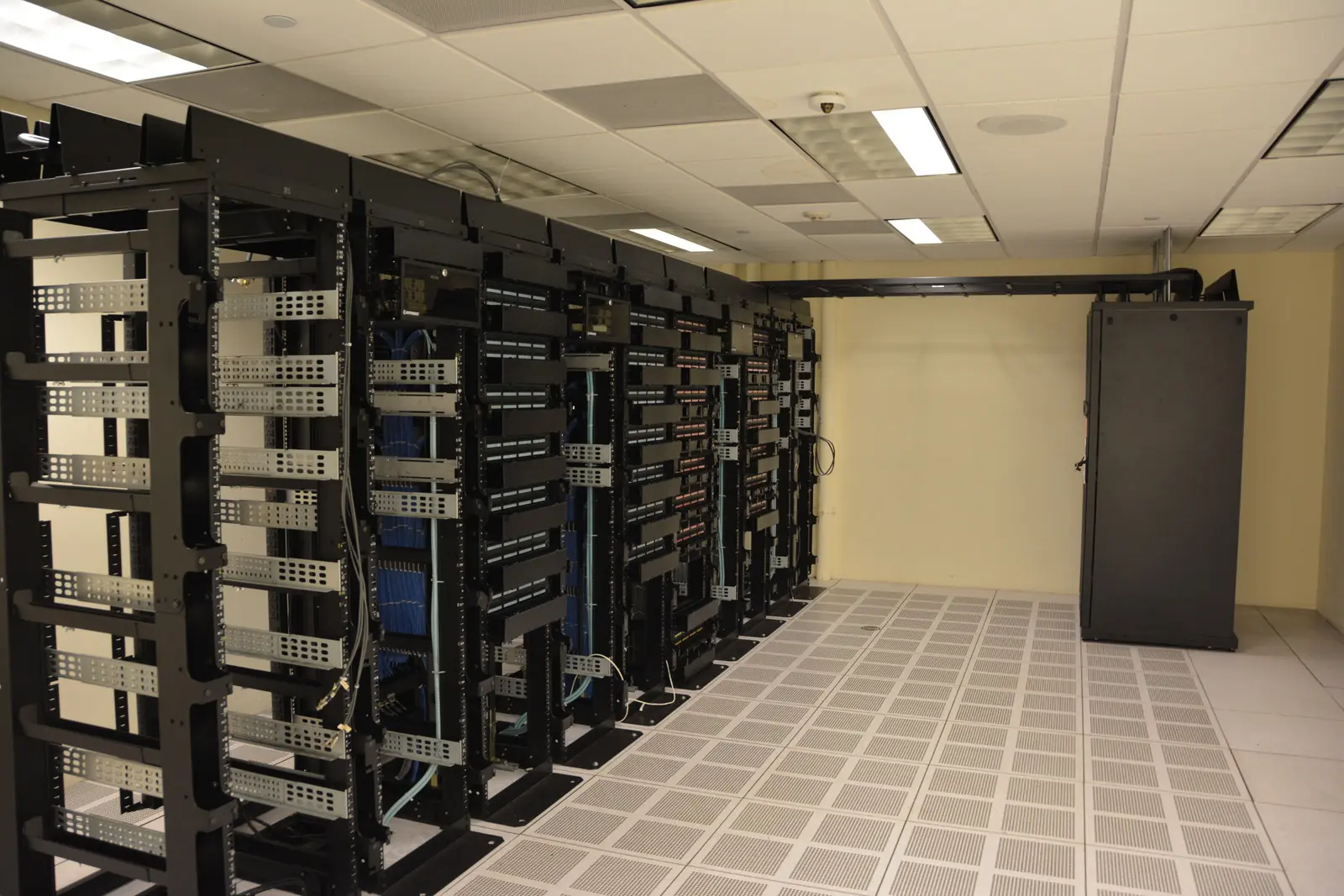
When GPU clusters need powered land
This page is a beginner guide to a fork in the road. You can rent extra GPUs for a while. Or you can look for land with a real path to electricity because the machines never turn off.
A GPU is a graphics processing unit: a chip that is very good at the math in AI, simulation, and rendering. GPU rental (also called GPU cloud) means you pay a company by the hour for those chips, then shut them off. A GPU cluster is a group of those machines that you treat as one system. Powered land is a development site with a credible path to large-load electricity, not a slogan about acreage near a power line.
Who it is for: someone who already knows they need GPUs and is starting to ask where a cluster should live. You do not need to be a utility engineer to follow this page.
Rent when you need cards this week, how often you will run is still a guess, and you would rather not own a building. Stop treating rental as the architecture when the same GPUs stay busy for years, cooling and power are becoming custom, and the next constraint is a site that can actually take large-load electricity.
This guide is not a hard sell and not a construction bid. Industry detail lives on the life-sciences, healthcare, finance, media, and AV pages. The land definition lives on what powered land is.
When GPU rental still wins
Rental wins on time-to-GPU. A reservation or a marketplace instance can exist this afternoon. A substation cannot. If the research question might die in a month, buying land is the wrong move. If the model size is still moving, you do not know which liquid cooling or which rack density you will want. Paying a premium per hour to learn that is rational.
Rental wins on unknown utilization. Utilization means how many hours the machines actually run. A new drug-discovery screen, a first imaging-model cohort, a one-off risk methodology, a prototype language model: none of those prove a five-year load. Cloud GPU lets the meter fall to zero. Owned hardware does not. Until you can show a calendar of busy hours, you do not have a cluster plan. You have a hope.
Rental wins when the software is still portable. Protein-model training, imaging loops, molecular-dynamics builds, ordinary PyTorch research, render farms, and driving simulators all run on rented NVIDIA GPUs if the driver story is honest. CUDA is NVIDIA's software layer for those chips. You are not locked to a floor. That portability is the product. Keep it while experiments still change shape every sprint.
Rental also wins as overflow. Even a sited cluster should burst. Month-end risk runs, a microscope dump, a one-time pre-train, a locked VFX sequence: those are why GPU cloud exists next to whatever you eventually build. The mistake is using overflow logic for the nodes that never turn off.
When land and power win
Land and power win when the cluster is no longer temporary. The signals are operational, not rhetorical. Utilization is high on a planning horizon measured in years. The mix of GPU types is stable enough to design power and cooling around. You want a specific way for GPUs to talk to each other, a liquid cooling loop, a power density, or a security boundary a shared GPU cloud will not give you. You are hiring people to keep the cluster up, not to chase instance quotas.
At that point the scarce input is not another famous GPU name. It is electricity on a date, at a service point, with a story that survives utility and lender review. Powered land is a development site where that electricity path is already credible. That can mean an interconnection position (a place in the utility's queue), substation headroom, a service agreement, behind-the-meter generation (power made on site), or a combination. It is not a deed under a transmission corridor and not an operating hall. Buildings, cooling, and the GPU floor still have to be designed.
Do not shop by invented campus megawatts. A megawatt is a large unit of electrical power. Public maps report project scope, not power you can plug a rack into on a date you choose. GPU clusters run hard, for long hours, in a small footprint. Custom cooling and custom power are why "we will just colocate in any vacant cage" fails at this scale. Colocation means renting space in someone else's building. If you need a site, start from the power case, then the land, then the hall.
Rental contracts can be long and still be rental: you do not control the utility relationship or the next density jump. A dedicated powered site is for teams who will still be running GPUs after the current generation's overlap.
Powered land, the directory, and the map
Read what powered land is for the definition. Use the U.S. data center directory for campus-level records. Use the data center map to see where announced and operating sites sit. Those pages are the encyclopedia. This guide is only the GPU-shaped fork: rent capacity now, or start a site process because the cluster stopped being an experiment. Do not paste affiliate buttons onto directory pins. Do not treat a map marker as a leased hall or a guaranteed megawatt. If you need GPUs this quarter, you are still in rental.
GPU cloud partners (placeholder)
Placeholder partner table, for when /gpu/ industry pages carry live rows. No URLs. No hourly prices. When those links go live, they will use rel="sponsored".
| Best for | GPU types | Notes |
|---|---|---|
| Partner TBD - experiments and unknown utilization | Rented NVIDIA GPUs | Placeholder. Time-to-GPU and a meter that can hit zero. rel="sponsored" when live. |
| Partner TBD - overflow on top of a sited cluster | Burst NVIDIA capacity | Placeholder. Keep rental for peaks after baseload is sited. rel="sponsored" when live. |
| Partner TBD - not a substitute for powered land | Dedicated cloud nodes | Placeholder. A reserved instance is still not a utility interconnection. rel="sponsored" when live. |
This table is not a ranking. It will reflect partner relationships once partners exist.
GPU cloud pricing varies. Verify live rates.
There is no honest single dollar-per-hour number on this page. List prices move with GPU type, region, and whether you pay only when the machine is on. Quoted "from" rates often skip storage, data transfer, and idle reservations. See the GPU cloud pricing index for how we talk about rates. We will not invent hourly prices here.
Count GPUs times hours you actually run. Do not use a peak week as the year. If the honest description is "we would rent the same shape all year," rental is a financing choice, not a bargain by default.
Next step
If the honest description of your GPUs is "we might need a hundred hours," stay on rental and use the industry pages for workload checklists. If the honest description is "these nodes are the product, and we need a place with power," open the map, read powered land, and browse data centers. That is the contact path this guide supports: look at real sites, then talk about land and load. It is not an affiliate ranking of GPU clouds.
Find powered land when you need a site. Rent GPUs when you need capacity now.
Related
- GPU cloud for life sciences and drug discovery
- GPU cloud for medical imaging and clinical NLP
- GPU cloud for quantitative finance and risk models
FAQ
Should we rent GPUs or buy powered land?
Rent if utilization is unknown, the experiment might end, or you need cards this week. Look at powered land when the cluster is steady, multi-year, and limited by electricity and a site. Many teams do both: rent the bursts, site the work that never turns off.
What utilization means rental has stopped making sense?
When the same GPU shape would be busy most hours for a planning horizon in years, and you keep extending the reservation because turning it off would break the product. Count real hours. Do not use a peak week as the year.
Is a reserved GPU cloud the same as powered land?
No. A reservation is capacity on someone else's floor. Powered land is a development site with a credible electricity path. You still have to design and build the hall. See what powered land is.
Can we colocate GPUs instead of controlling land?
Yes, and many clusters live that way. Colocation still depends on a building that already has power and cooling headroom. When that headroom is gone, you are back to the site problem the directory and map exist to show.
Do we publish campus megawatt figures on this guide?
No. This page does not assign megawatts to named campuses. Reported campus MW lives on directory records and is not a plug-ready number for your racks.
Where should I start if I still need GPUs this quarter?
Stay on rental. Use the pricing index for how we talk about rates, then re-check the provider. Come back to this guide when the machines stop turning off.
Sources
- What is powered land
- U.S. data center directory
- Powered Lands data center map
- NVIDIA BioNeMo Framework
- NVIDIA Clara
- GROMACS installation guide
- MONAI
Need land or power instead? See the map or contact.